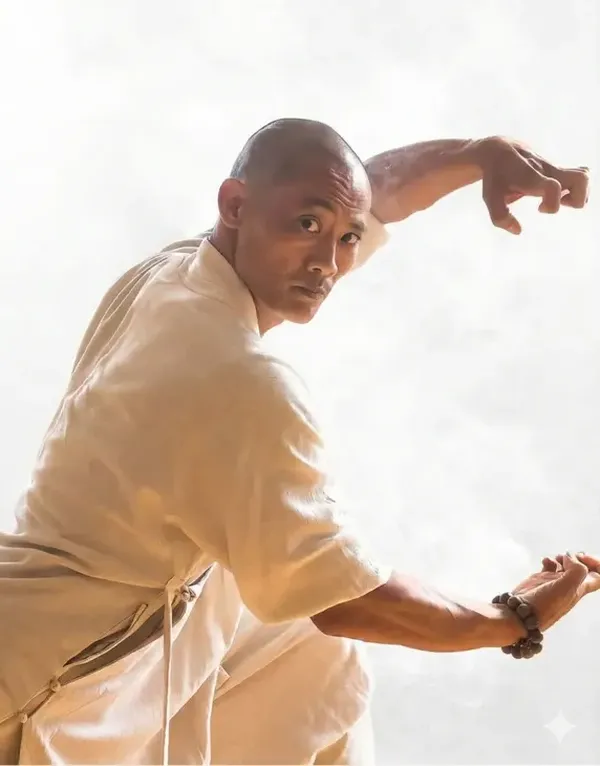
5 Days Isolated from the World with Master Shi Heng Yi The Secrets of Luohan 13: An experience report from the Romanian retreat.
-
November 29, 2025 -
Ferenc Németh
Many of us know the shaolin.online videos: the shaven-headed master with a stern gaze and incredible knowledge, bringing Shaolin wisdom into our living rooms. But what is he really like when the cameras are turned off? And what happens when 40 people gather in the middle of nowhere in Romania to follow him for 6 hours a day?
In October, I received a newsletter that decided the end of my year: Master Shi Heng Yi (SHY) announced the last retreat of the year. The topic was the legendary Luohan 13 set – exactly the movement form that originally led me to start Qigong years ago. Although I already knew the form, I felt that with the Master's personal guidance, I could truly deepen this knowledge.
The Obstacle Course of Getting There
The decision was easy, but the implementation almost failed at the starting line. Although the 1,000 Euro participation fee – which included accommodation and full board – seemed fair for an event of this caliber, a "cold shower" came minutes after registration opened: the system stated that all spots were sold out. I couldn't believe I had missed out in just a few minutes. Eventually, thanks to my persistence and the telephone assistance of a Romanian-speaking colleague, it turned out to be a system error, and I managed to snag a spot in the 40-person group.
The logistics weren't simple either. The location, the YOUness WELLness Clinic, would have been over 800 kilometers away by car—a massive 10-hour drive. Fortunately, I found a lifeline: a flight to Bucharest for a ridiculously cheap price of 18,000 HUF. Since the plane departed in the evening, I set off a day early, on Wednesday. From Bucharest airport, it was another hour by taxi to the center, located about 50 kilometers from the city.
Perfect Isolation – Zero Spending
Upon arrival, I faced the reality that we were truly "in the back of beyond." The "village" around the center consisted of only a few houses; no shops, no restaurants. We didn't leave the premises, but there was nowhere to go anyway. This resulted in a strange but liberating feeling: during the 5 days I was there, I couldn't spend a single cent, as there was nothing to buy.
This isolation was topped with digital silence. Cell reception was minimal (internet was only available on the top floor), so phones remained on the tables. No news, no notifications, no scrolling through social media.
Retreat or Training Camp? – The Power of Community
It is important to clarify a conceptual difference that I truly understood there: this was not a traditional training camp, but a real "retreat." In an average camp, at the end of training, the team scatters: some to the city, some to their rooms, some for a beer.
Here, we were enclosed together. We didn't wander off; we ate together (often in silence), we lived in the same space. This kind of 24-hour enclosure—combined with total isolation from the outside world—had a much stronger team-building effect than any average sports camp. The shared space and the shared struggle wove an invisible bond between the 40 people.
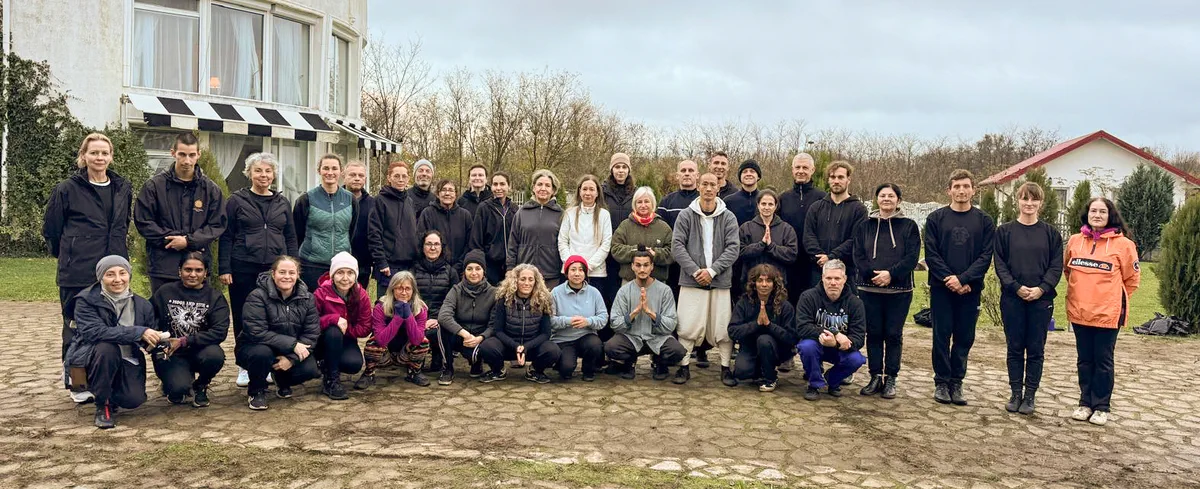
Group Photo
Not a Wellness Weekend – The Daily Schedule
Whoever came here to relax was in the wrong place. To give you a sense of the intensity, here was our strict daily schedule:
- 06:30 – 07:00: Morning Meditation
- 07:30 – 08:30: Warm-up, Stretching
- 09:00: Breakfast
- 10:00 – 12:30: Practice (Luohan 13)
- 13:00: Lunch (in silence)
- 15:00 – 18:00: Practice
- 19:00: Dinner
- 20:00 – 21:30: Conversation with the Master
The Depths of Luohan 13: Martial Arts, Spirals, and Flow
The backbone of the camp was the practice itself. Master Shi Heng Yi taught a more complex, continuous version of the Luohan 13. Although the team's composition was mixed—from young people to 70-year-olds, from total beginners to experienced practitioners—the Master's method captivated everyone.
He didn't just show the movements; he revealed the martial arts aspect behind every single element. This was key: when we understood that a movement was actually a block, a punch, or a throw, our brains and bodies recorded the logic much more easily.
The technical depth of the practice was impressive:
- Pulsation and Spiral: We learned that movement is not linear. At one moment, the body, like a spiral, winds itself up, performing compression (like a compressed spring, storing energy), and in the next moment, it releases, exploding this force.
- The "Rolling Torrent": The Master placed great emphasis on the connecting movements. These are the tiny transitions that prevent the exercise from falling apart into 13 separate parts. The goal was to maintain unity from start to finish, making the movement a continuous, unstoppable flow.
- Concentration: You couldn't "just do it." As the Master said: "I can see exactly from the position of your fingers whether you are concentrated or not."
Of course, the physical challenge was not absent. Since this is an advanced kata, the movements had to be performed in deep stances (mabu). It happened more than once that our thighs were trembling from the load, but the collective pulse pushed us through the low points.
Music Inside, Silence Outside
In person, the Master is much more approachable and humorous than in the videos. He had an interesting habit: during indoor programs—the morning warm-up, stretching, and evening talks—he always turned on music. This created a great atmosphere. However, when we went out to the yard for the main practice, the music stopped. There, only the sounds of nature and the noise of the practice remained.
Bees, Tea, and Vegetarian Canaan
Camp life was colorful. We were visited by Dr. Stefan Stângaciu, who is not an average doctor, but a globally recognized authority on apitherapy (healing with bee products).
It was fascinating to see how he uses everything from bee venom and propolis to royal jelly for healing. He even treated specific complaints on-site, so we could see firsthand how this ancient yet scientifically grounded method works.
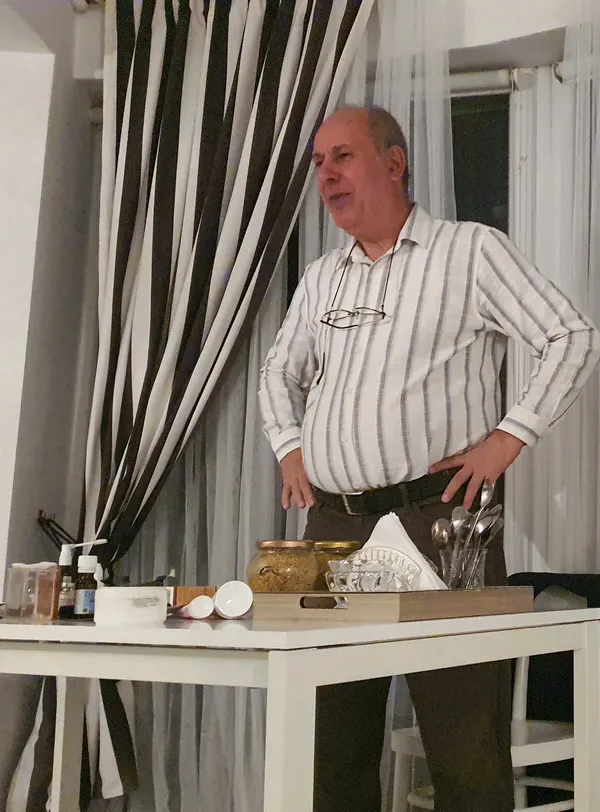
Dr. Stefan Stângaciu
In addition, we participated in a fascinating tea ceremony. A particular fear of mine was the vegetarian diet, but it was unnecessary: the kitchen was brilliant, plentiful, and filling; honestly, I could easily live on this fare at home too.
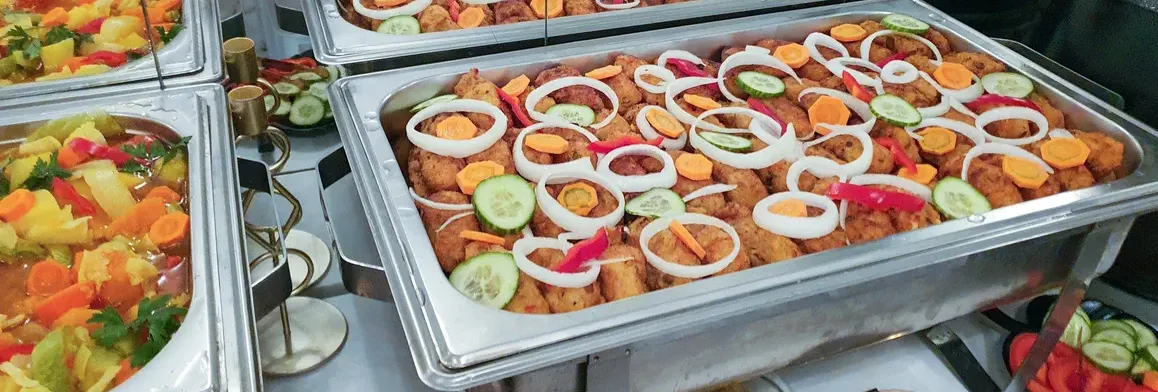
The vegetarian food was delicious and plentiful
Tears and the Message
On the last day, the program was closed by a special breathing exercise that affected us by changing the oxygen-carbon dioxide ratio. The effect was staggering: the calm in the room was palpable, and for several people—including myself—tears flowed as tensions broke to the surface.
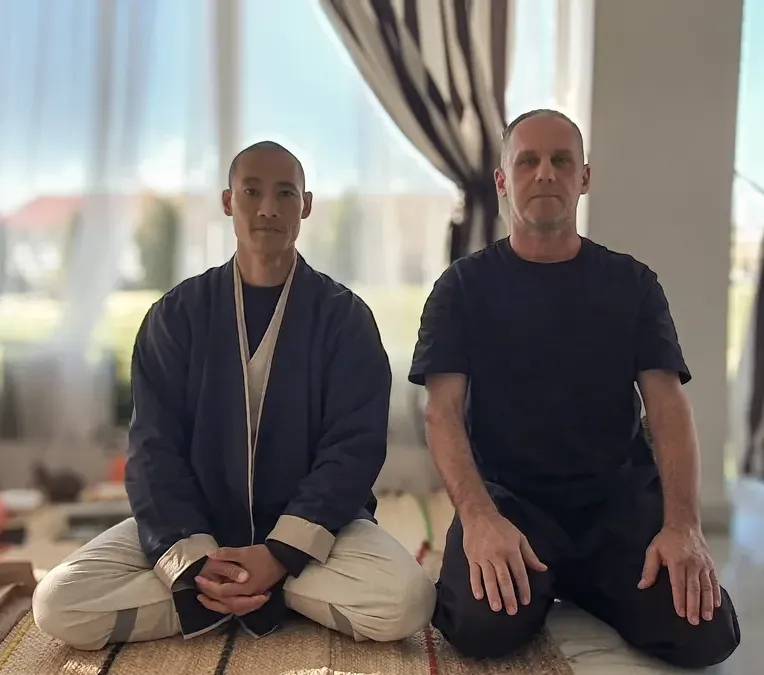
As a closing, we managed to get permission to video the Master's form, I had my book signed, and a group photo was taken. Part of the team headed for the airport, while the bravest remained for the next program: the "10 days in darkness" retreat.
Time Travel and Well-Deserved Rest
The journey home on Monday evening still held a little twist. My plane took off from Bucharest at 23:00, and interestingly, I was already in Budapest by 23:05. Although the two cities are indeed close, they aren't that close: this strange little "time travel" was due to the one-hour time difference.
Arriving back in Budapest, thanks to my daughter, I spent the night in a beautiful new hotel belonging to the airport. After the Spartan conditions and intense physical exertion, the soft bed and rest were a true gift.
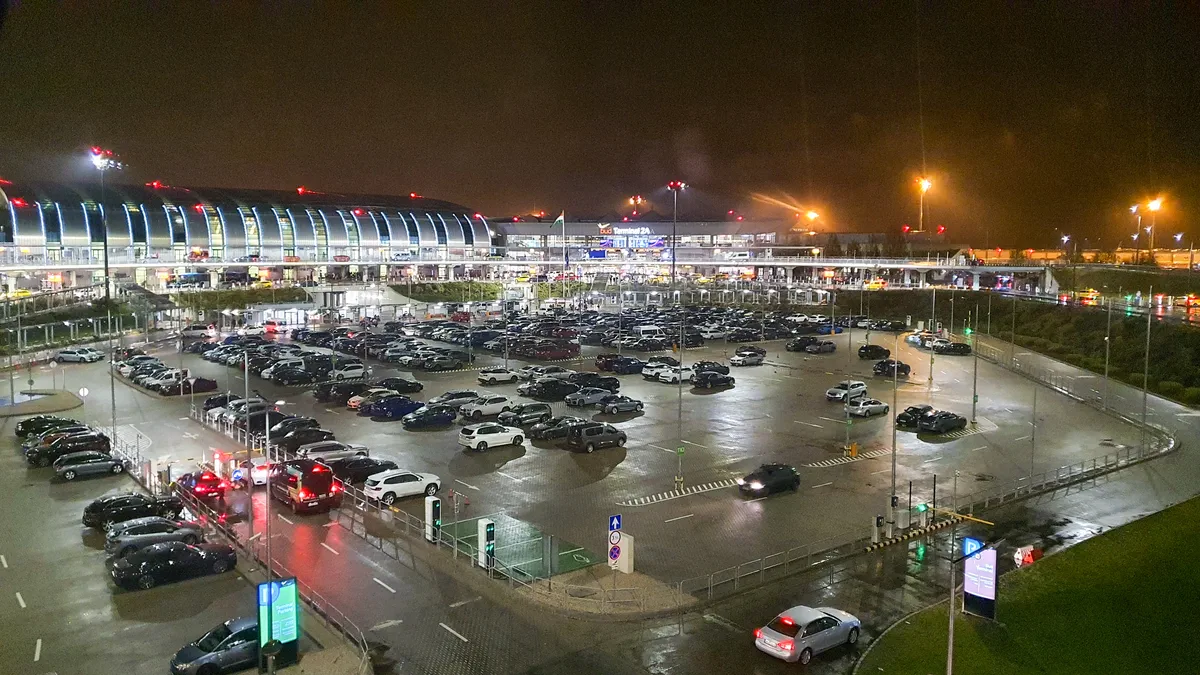
Budapest Airport - view from the Tribe hotel
Epilogue
Now at home, my knees still remind me of the sudden load, but I don't regret a single minute. I got what I went for: I deepened my knowledge from a pure source, met the Master, and experienced what it's like when people from 10 different countries move in a community for one goal, completely isolated from the world's noise.
The most important takeaway regarding the Luohan practice came from the Master:
"This exercise is not meant to prolong our life. It is meant to ensure that we cannot focus on anything else but the present moment."